
TROMBONES ON A TUESDAY July 14, 2020
One of the things I love about serving this congregation is the number of people I get to associate with who continue my education almost daily.
One of them is our own retired bone doc, Scott Lachniet. He plays trombone, among his many other talents. He sent me an email today letting me know he was reading a book I did not know existed. The title was “God’s Trombones: Seven Negro Sermons in Verse.” Before getting worked up about that label Negro, check the publication date, 1927, and its author, James Weldon Johnson. Those of us who read the notes in the New Century Hymnal about composers and authors will associate his name with one of the songs we sing a couple of times every year (The stirring music, by the way, was composed by his brother, J. Rosamond Johnson):
Lift every voice and sing, till earth and Heaven ring, Ring with the harmonies of liberty; Let our rejoicing rise, high as the listening skies, Let it resound loud as the rolling sea. Sing a song full of faith that the dark past has taught us, Sing a song full of the hope that the present has brought us; Facing the rising sun of our new day begun, Let us march on till victory is won.
James Weldon Johnson was an educator. While teaching school, he also studied law, and in 1897 became the first African-American admitted to the Florida Bar Exam since reconstruction. In 1901 he and his brother moved to New York City, where they wrote a number of hits for musical theater. He became involved in Theodore Roosevelt’s 1906 presidential campaign, and was appointed consul in Venezuela, and later, Nicaragua.
When he retired from diplomatic service, he returned to New York and became one of the leading figures of the Harlem Renaissance. He became a field secretary and organizer for the fledgling NAACP, giving speeches and leading demonstrations against northern race riots and southern lynchings, including a 10,000 person silent protest parade down 5th Avenue in 1917. In 1930, Fisk University in Nashville created the Spence Chair of Creative Literature for him, and from 1934, he served concurrently as the first African-America professor at New York University. And here is what Scott sent me in that email:
In [Johnson’s] prologue to the poems he talks about ‘old time preachers’ and describes one who, after reading a rather cryptic passage took off his spectacles, closed the Bible with a bang and by way of preface said “Brothers and sisters, this morning—I intend to explain the unexplainable—find out the indefinable—ponder the imponderable—and unscrew the inscrutable.”
Along with the expectation, that I will find a way to use that line somewhere!
Grace and peace to you all…
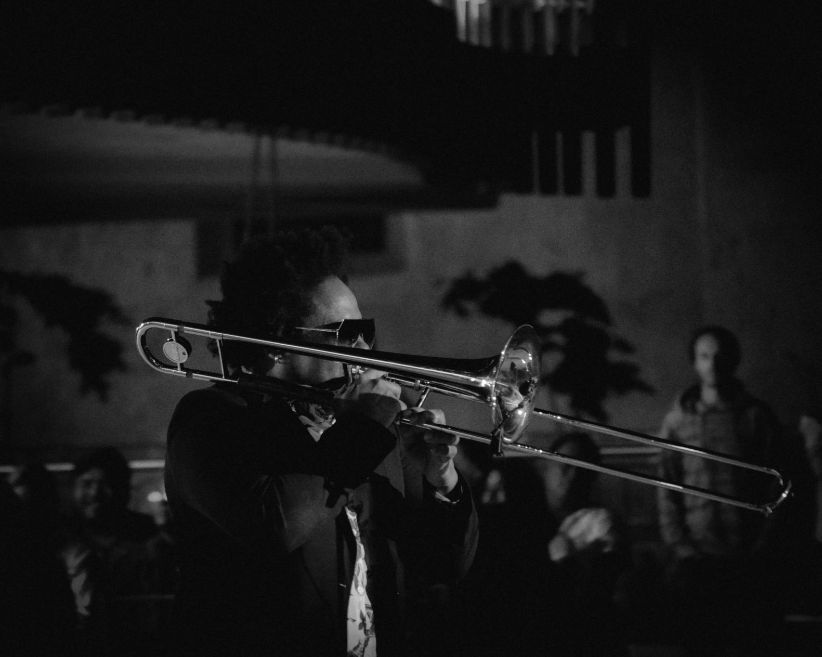
Photo by Jorge Zapata on Unsplash